The hard part was not creating listings. It was making teams and sponsors trustworthy enough to transact.
Spontus connects college club sports teams with sponsors through structured team profiles, sponsor profiles, sponsorship listings, applications, and review workflows.
My work focused on turning the marketplace into an executable system: canonical domain language, trust states, verification gates, schema planning, security automation, and demo continuity.
40 commits by Brian at review timemerged auth + verification systemSupabase/RLS schema foundation in progressoffline demo flow restored
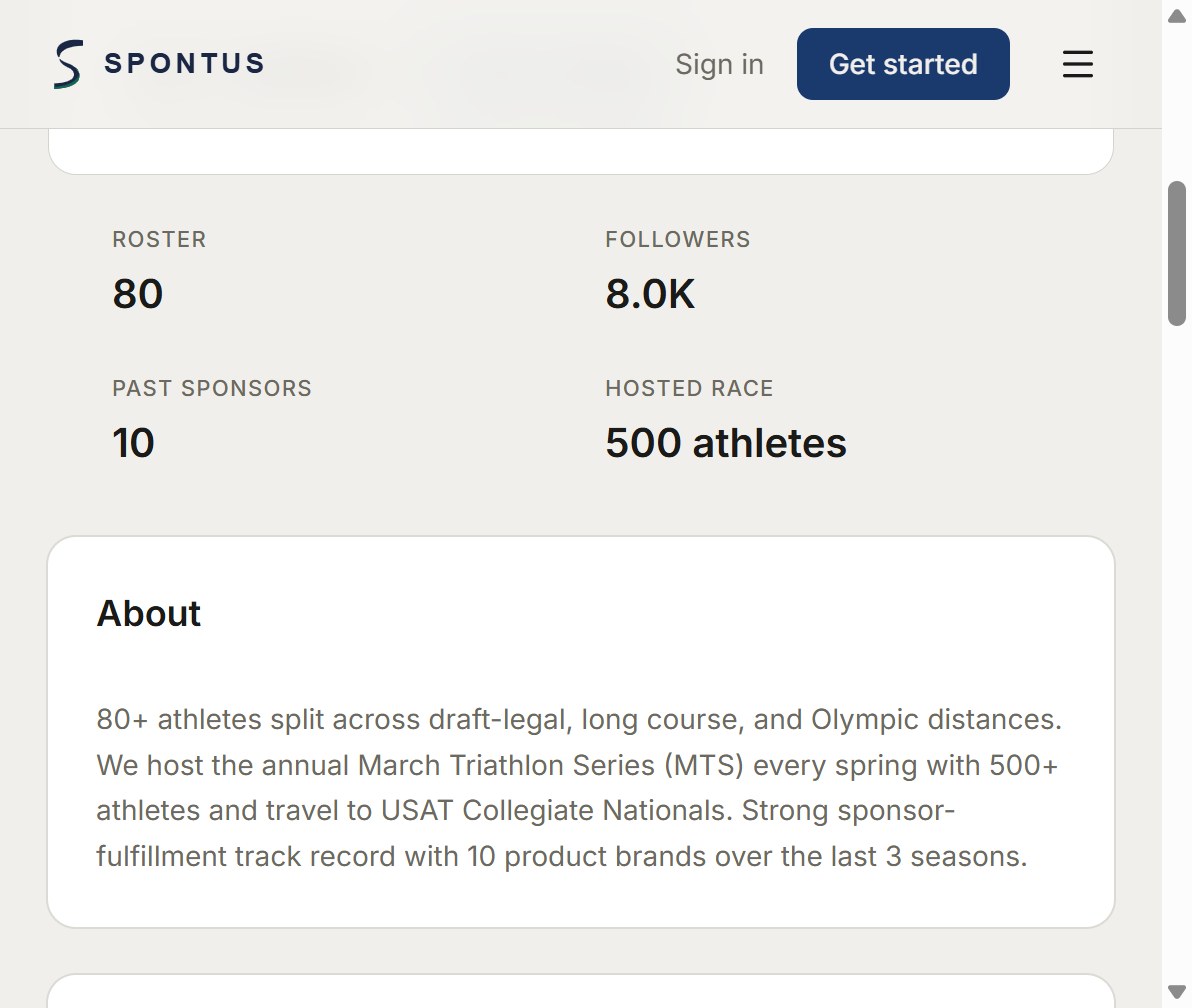
Seeded production demo showing how a team profile turns sponsorship history and audience data into structured marketplace evidence.
System flow
Trust-to-transaction flow
01team .edu signup
02sponsor work email
03profile completion
04manual verification
05application review
Marketplace trust system
Verification gates turn listings into credible opportunities.
The core product work connects business risk to technical controls: identity checks, profile completion, verification state, schema boundaries, and workflow automation.
Real project media appears where available, with placeholder cards only where sanitized screenshots are still needed.
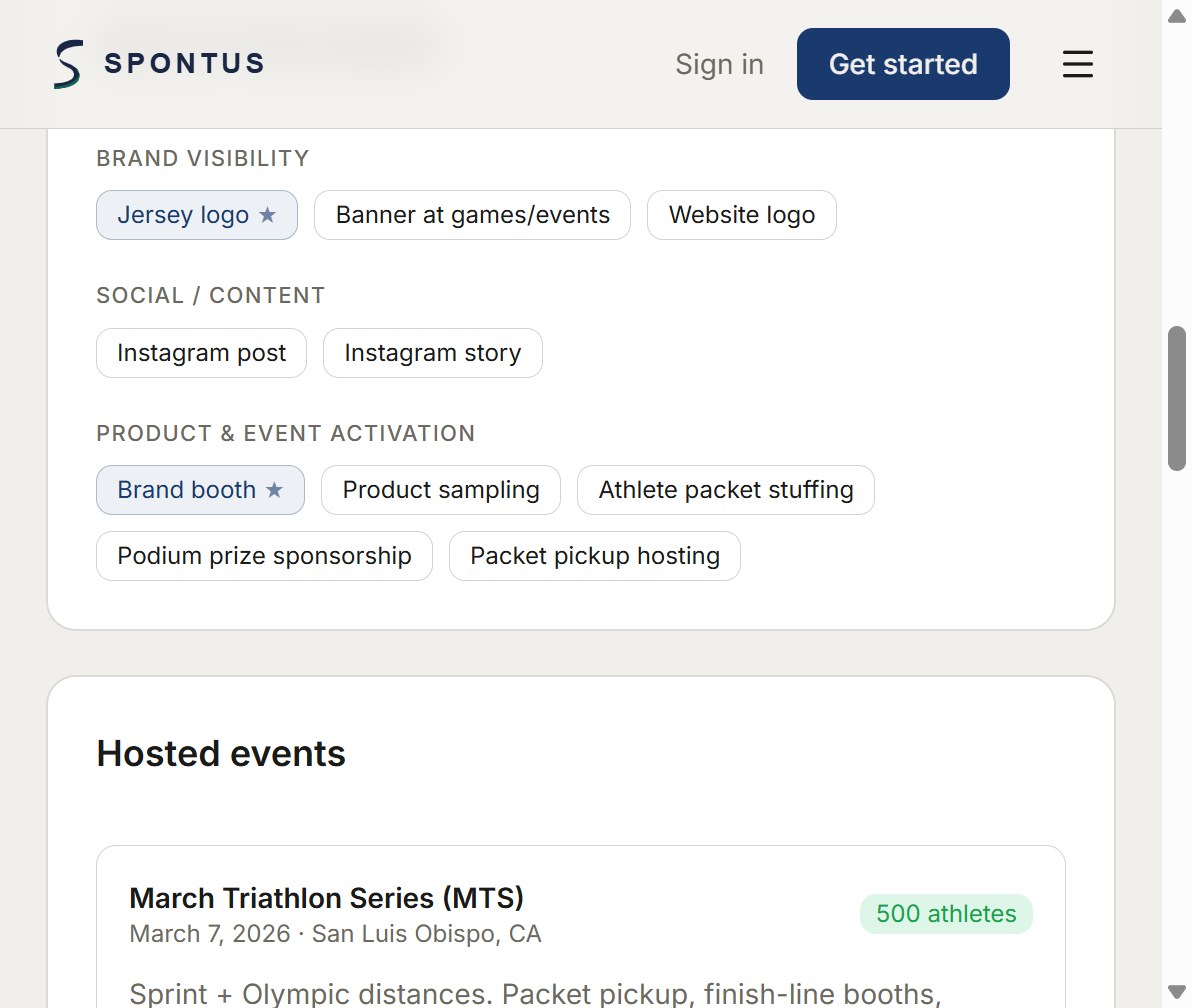
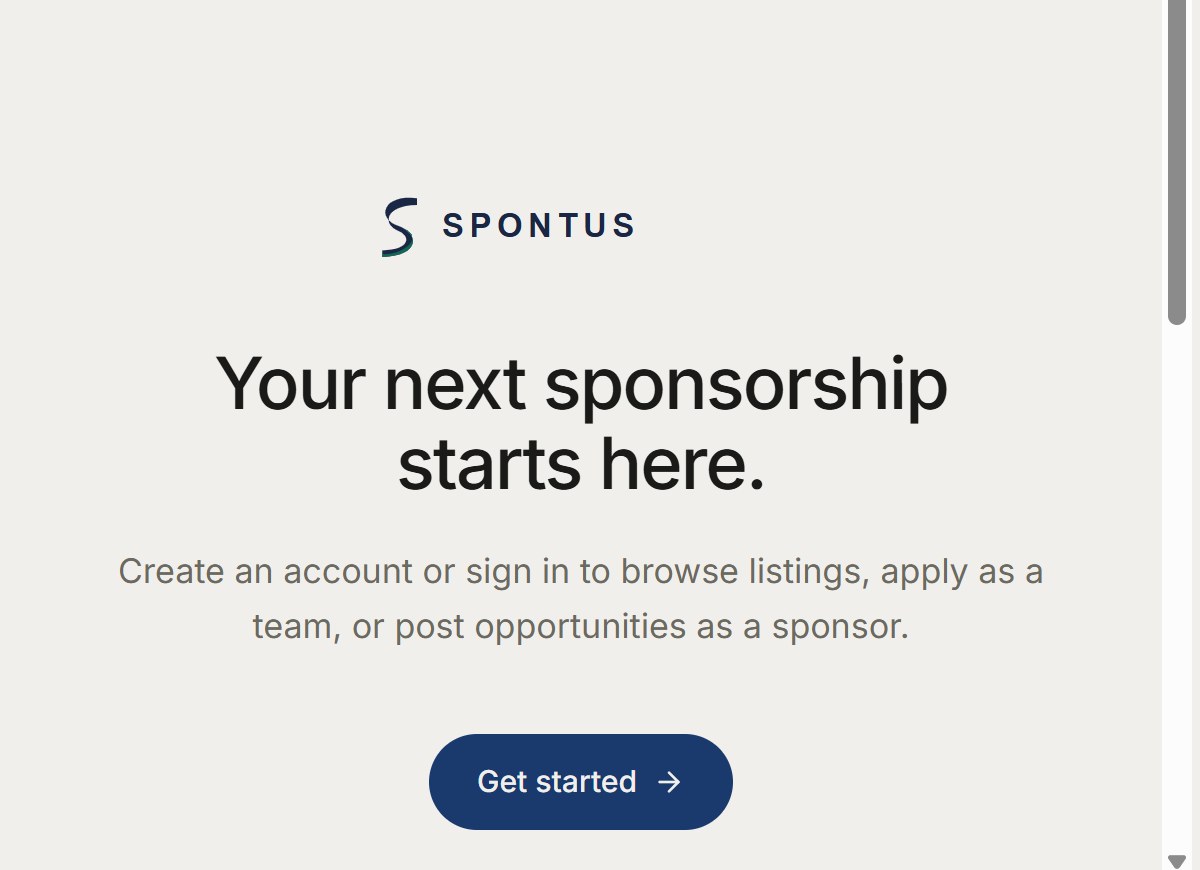
Structured sponsorship inventory makes the team's available brand, content, and event activations directly inspectable.Listing access, applications, and sponsor posting begin behind an explicit account gate rather than an open anonymous flow.
Supabase schema/workflow artifact needed.Use a schema or PR evidence image showing tables, RLS, and workflow gates.
Supabase schema/workflow artifact needed.
Technical deep dives
The first product decision was language.
Domain model before code
Spontus needed a shared vocabulary before the UI could be trusted: Teams, Sponsors, Sponsorship Listings, Applications, Deals, Deliverables, Proof, and Contacts. That model gave product specs, database planning, and implementation slices one map.
The domain model defines marketplace entities and lifecycle states before final schema details.
MVP build slices sequence the product into team profile, sponsor listing, application, sponsor review, and admin verification loops.
The backend plan keeps payments, matching, and CRM depth out of the MVP so trust workflows can ship first.
A listing marketplace fails if anyone can look legitimate.
Verification as marketplace trust
PR #12 added team .edu validation, sponsor work-email validation, profile completion, verification status tracking, and application gating. The goal was not just form validation; it was making access depend on explicit trust states.
Teams and sponsors enter different signup paths with different email-domain expectations.
Profiles move through draft, submitted_for_verification, verified, needs_changes, and suspended states.
Application flows check verification status so unverified sides cannot bypass the marketplace trust layer.
Turned product ambiguity into a shared domain model, MVP sequence, and implementable trust workflow.
Shipped merged verification and demo-resilience work while keeping schema/security foundations moving in PR review.
Showed hiring-manager-relevant ownership across product framing, full-stack implementation, testing, and repo operations.
Spontus shows that marketplace engineering is trust engineering. The product only works if identity, eligibility, data access, and workflow boundaries are explicit enough for both teams and sponsors to act on.